
Value-Based Care
Explore how value-based care models improve outcomes and lower costs for aging adults.
View all in Value-Based Care Topic
Forging Aligned Partnerships Between Value Based Care Organizations & Geriatric Emergency Departments: A Toolkit for Geriatric Emergency Departments
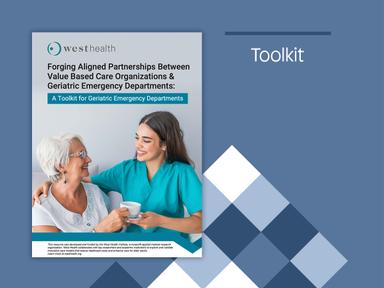
Value-Based Care Organizations (VBCOs) can often provide additional disposition options or outpatient resources that GED clinicians are not aware of or do not know how to easily access, such as acute care at home. At West Health, we believe that VBCOs and Geriatric Emergency Departments (GEDs) can forge aligned partnerships to improve the cost and care trajectory for older adults by reducing unnec...
Leading the Way in Geriatric Emergency Care: The VA’s Patient-Centered Innovation
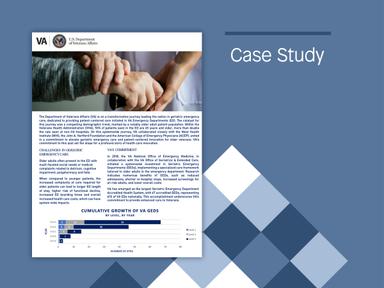
The Department of Veterans Affairs (VA) is on a transformative journey leading the nation in geriatric emergency care, dedicated to providing patient-centered care initiated in VA Emergency Departments (ED). The catalyst for this journey was a compelling demographic trend, marked by a notably older adult patient population. Within the Veterans Health Administration (VHA), 50% of patients seen in t...
Forging Aligned Partnerships Between Value Based Care Organization & Geriatric Emergency Departments
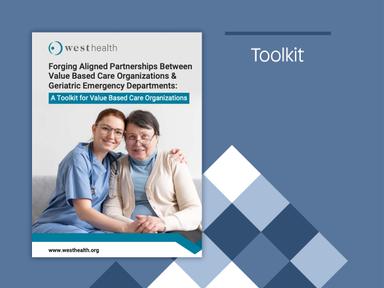
Executive SummaryHospital emergency departments hold the key to preventing avoidable hospital admissions for older adults, addressing a costly and widespread problem with serious ramifications for Medicare and health systems at large. Potentially avoidable readmissions cost Medicare $17 billion a year, in large part because they’re so common. Seventy-three percent of hospital readmissions from ski...
Northwell Health GED Case Study: Goals of Care, Throughput, Clinical Outcomes
Northwell Health, New York’s largest healthcare provider, has made it a strategic system goal to provide age-friendly care. Northwell Health has 18 emergency departments (EDs), one pediatric and 17 that treat more than 850,000 patients of all ages, 33% of them 65 and older. Northwell Health’s commitment to improving care for older adults led them on a journey toward system-wide geriatric emergency...
PACE Telehealth Playbook
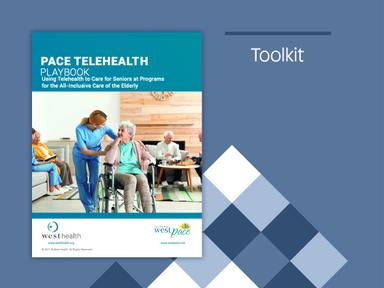
The Program of All-Inclusive Care for the Elderly (PACE) is a comprehensive health care delivery system integrated with Medicare and Medicaid financing. PACE organizations provide comprehensive services, including medical care, personal care, supportive services, transportation, adult day health care, inpatient hospital and nursing facility care coordination, caregiver education, assistive devices...
States’ Deployment of Short-Term Funding in Home- and Community-Based Services Exposes Need for Longer-Term Investments
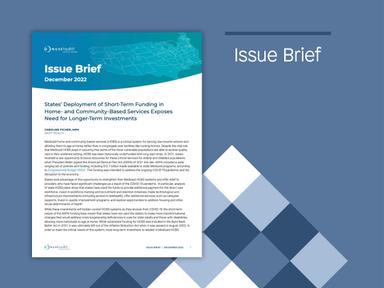
Medicaid home and community-based services (HCBS) is a critical system for serving low-income seniors and allowing them to age at home rather than in congregate care facilities like nursing homes. Despite the vital role that Medicaid HCBS plays in ensuring that some of the most vulnerable populations are able to receive quality care in their preferred setting, HCBS has been historically underfunde...
Home-based Acute Care: Getting Started Guide
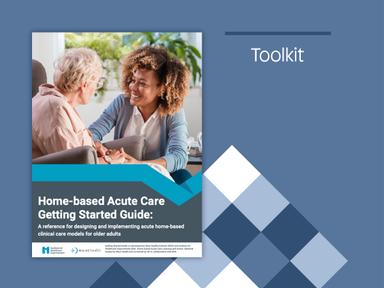
The West Health Institute in collaboration with the Institute for Healthcare Improvement developed the Home-based Acute Care Getting Started Guide as part of our 2019-2021 work. This resource guides the process for designing and implementing home-based clinical and operational acute care models for older adults. Created by and designed for organizations in the early stages of program development.
A Roadmap for Effective State Leadership in Value-Based Payment Reform
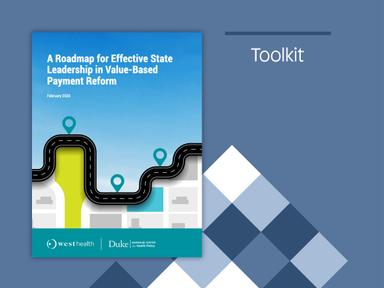
The roadmap emphasizes the importance of states in setting priorities, advancing data sharing, and developing implementation strategies that align with state goals and reduce the burden on healthcare providers. It highlights successful initiatives from various states, such as North Carolina’s comprehensive approach to integrating public and private measures to shift healthcare payments to value-ba...
Americans’ Views of Healthcare Costs, Coverage, and Policy
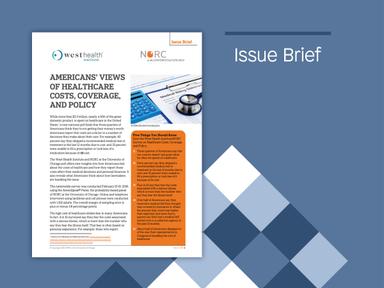
Five Things You Should Know from the West Health Institute/NORC Survey on Healthcare Costs, Coverage, and PolicyThree quarters of Americans say that our country doesn’t get good value for what we spend on healthcare. Forty percent say they skipped a recommended medical test or treatment in the last 12 months due to cost, and 32 percent were unable to fill a prescription or took less of it because ...
PACE Start-Up and Expansion Guide

BackgroundPrograms for the All-inclusive Care for the Elderly (PACE) provide health and social services to frail, older adults. PACE provides care to ~60,000 Americans, the vast majority of whom are dual Medicaid/Medicare eligible. With nearly 7.6 million Medicare-eligible and 2.2 million dual-eligible Americans living with complex needs, a significant opportunity exists to expand the number of PA...