
Societal Readiness
Explore insights and resources on how prepared communities and systems are to meet the challenges of a fast-growing aging population.
View all in Societal Readiness Topic
Addressing Cognitive Decline in a Diverse Aging Population
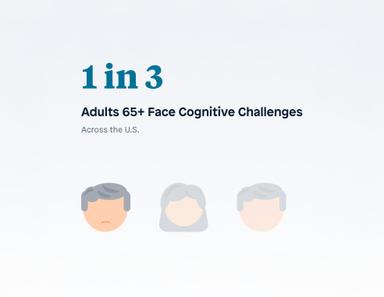
Cognitive decline affects nearly one-third of adults age 65 and older across the U.S., shaping how they move through daily life, interact with others, and navigate the healthcare system. While cognitive changes can be a normal part of aging, the experience is far from universal. For older adults from historically marginalized racial and ethnic groups, cognitive decline is compounded by systemic in...
Navigating Family Caregiving as We Age
Increasingly, caregiving roles are extending into later years for adults. According to the 2025 AARP Caregiving in the U.S. Report, 59 million Americans provide care for adults age 18 and older, who typically have complex care needs. The average age of these family caregivers is 51 years old, and they are lifelines to sustaining families and filling gaps in the U.S. long-term care system given the...
From Isolation to Connection: Supporting Older Adults in Connecting to Community
Social Isolation and loneliness — what is the difference? Social isolation means a person has few social relationships and/or little contact or support from others. Loneliness is the subjective experience of feeling alone or not close to others. Someone can, objectively, have many social connections, but still feel alone. Social isolation is a growing public health concern in the United States, l...
Key Challenges Women Face that Impact Their Financial Security
Planning for retirement is difficult at any age, but it can be especially challenging for women ages 50 to 64, who are often juggling work, caregiving responsibilities, and rising health expenses associated with an increase in health care needs. These years are also often women’s peak earning years, making this period a critical window to build savings and strengthen financial security. Elder Inde...
Preparing for the Future: Using Data to Support Aging in America
It’s no secret that communities worldwide are experiencing a demographic shift, with older adults soon outnumbering younger generations. In the U.S., the Census Bureau projects that by 2034, adults ages 65 and older will outnumber children younger than 18 for the first time in history.West Health has worked with federal and state agencies to facilitate aging-focused planning, and a common challeng...
Leveraging Multisector Plans for Aging to Promote Health Equity
As our population skews older, ensuring equitable access to healthcare and social services becomes increasingly important. Multisector Plans for Aging (MPAs) have emerged as a pivotal framework for addressing the diverse needs of older adults and promoting health equity. This comprehensive strategy encompasses initiatives aimed at enhancing well-being and quality of life for older Americans, while...
Creating the Strategic Framework for a National Plan on Aging
Aging in America and the Case for a National Plan on AgingThere are more than 77 million adults ages 60 and older living in the United States, representing more than 23% of its total population, and this cohort is expected to continue growing rapidly in the coming years. In addition, more people are aging with a disability. Our changing demographics require all levels of government, along with key...
Why MPAs Are Critical to Equitably Meeting the Needs of Aging Communities
In the aftermath of the COVID-19 pandemic, states have an opportunity to rebuild their systems serving elders to better serve all older adults and people with disabilities. This massive feat must begin with a plan.Multisector Plans for Aging—also known as master plans, strategic plans or aging-well plans—offer a powerful tool for communities to better meet older adults’ long-term services and supp...
Mapping America's Aging Future: What the National Aging Readiness Dashboard Reveals
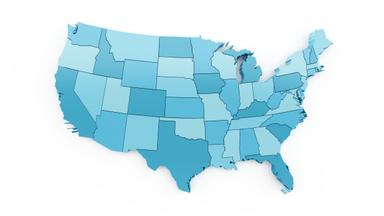
New West Health Mosaic data tool maps the state of aging in America — showing who's ready and where we need to catch up. A demographic shift unlike any in our history is unfolding across America. By 2034, adults 65 and older will outnumber children under 18 for the first time ever. This isn't just a statistical curiosity — it's a transformation that touches everything from healthcare to housing to...
An Ailing Nation: Americans Are Getting Sicker Younger
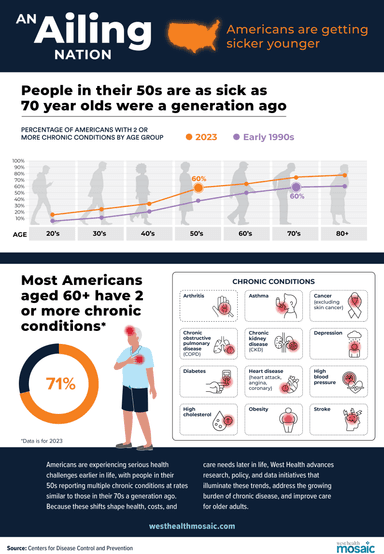
The data below compare the share of adults with two or more chronic conditions in the early 1990s and in 2023, illustrating how the burden of multi-morbidity has shifted toward younger ages over time. The graphic also highlights the high prevalence of chronic disease among adults 60 and older and identifies the conditions most commonly contributing to this trend. Together, these findings help expl...