
Healthcare Delivery
See how innovative models of healthcare delivery are designed to improve outcomes and experiences for aging Americans.
View all in Healthcare Delivery Topic
What Is Medicaid? A Guide to Qualifications, What It Covers, & Costs
Key Takeaways: Medicaid covers 74M+ Americans, 41% of U.S. births, and 5 in 8 nursing home residents, making it the largest health insurer in the U.S. Eligibility combines federal rules with state variation; expansion states cover adults up to 138% of the federal poverty level. Mandatory benefits include hospital care, physician services, and nursing facility care; dental, vision, and prescription...
Prescription Drug Costs: Plans, Coverage, & Other Price-Driving Factors
Key Takeaways: U.S. prescription drug spending hit $805.9 billion in 2024, with prices averaging 2.78x higher than 33 other OECD nations. High costs stem from manufacturer pricing power, patent thickets, opaque PBM rebates, and insurance cost-sharing tied to list prices. The IRA capped Medicare Part D out-of-pocket costs at $2,100 in 2026 and enabled the first round of Medicare drug price negotiat...
Healthcare Service Delivery for Older Adults: A Landscape of Programs and Funding
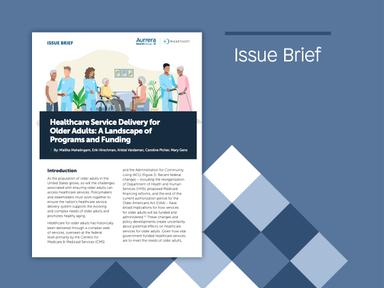
IntroductionAs the population of older adults in the United States grows, so will the challenges associated with ensuring older adults can access healthcare services. Policymakers and stakeholders must work together to ensure the nation’s healthcare service delivery system supports the evolving and complex needs of older adults and promotes healthy aging.Healthcare for older adults has historicall...
Medicare 101: What Does It Cover & How Much Does It Cost?
Key Takeaways: Medicare has four parts: Part A covers hospital and inpatient care, Part B covers doctor visits and outpatient services, Part C (Medicare Advantage) bundles A and B through private insurers, and Part D covers prescription drugs. Eligibility comes through three main paths: turning 65 with a 10-year work history, receiving SSDI for 24 months, or a qualifying diagnosis of ESRD or ALS. ...
How Ambient Intelligence is Giving Doctors Time Back With Their Patients
Dr. Sarah Coleman's story represents thousands of healthcare providers facing similar documentation challenges. She had just finished seeing Mrs. Peterson, an 87-year-old patient with diabetes, heart disease, and early dementia—a complex case requiring careful coordination between multiple specialists. In the past, documenting such a visit would have taken Dr. Coleman 20 minutes after the appointm...
Hardwiring Best Practices for Safe Mobility and Delirium Prevention in Older Adult Patients
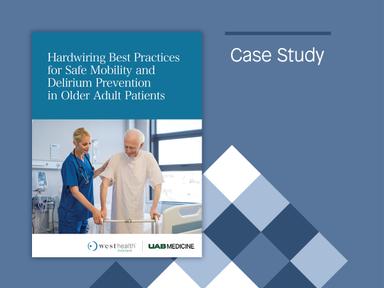
IntroductionThis case study, featuring the University of Alabama Birmingham Hospital, underscores how deliberate system redesign can embed evidence-based mobility and delirium prevention strategies into routine care. This approach improves outcomes for older adults — reducing complications, length of stay, and post-acute care needs — and offers a scalable model to transform front-line workflows ac...
Industrial Evolution

Over the last decade, pharmacy benefit managers (PBMs) have become highly consolidated and vertically integrated, playing a central role in negotiating drug rebates on behalf of health plans. In recent years, however, PBMs have increasingly shifted this function to newly created entities known as rebate aggregators. Launched by the three largest PBMs, these aggregators now negotiate billions of do...
Leading the Way in Geriatric Emergency Care: The VA’s Patient-Centered Innovation
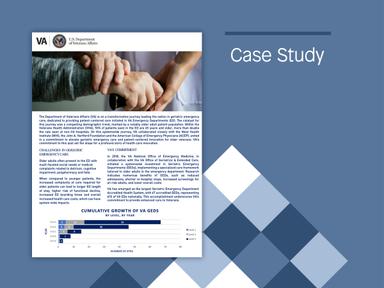
The Department of Veterans Affairs (VA) is on a transformative journey leading the nation in geriatric emergency care, dedicated to providing patient-centered care initiated in VA Emergency Departments (ED). The catalyst for this journey was a compelling demographic trend, marked by a notably older adult patient population. Within the Veterans Health Administration (VHA), 50% of patients seen in t...
Improving screening rates through EMR integration
At Tufts Medical Center, located in the heart of Boston’s Chinatown, roughly one in ten emergency department (ED) patients are 65 or older. In 2018, Tufts Medical Center was the first hospital in New England to become a Level 1 Geriatric Emergency Department (GED). Geriatric screenings were embedded into the electronic medical record (EMR) as a part of this accreditation, and Tufts saw a surge in ...
Palliative Care Playbook for PACE
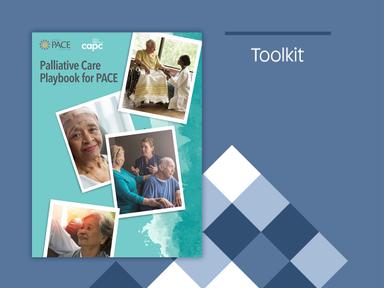
Summary of best practices and tips for PACE organizations to improve care for participants through palliative care principles, practices, and specialists.