
Healthcare Costs & Delivery
Examine the impact of a growing older adult population on healthcare affordability, quality, access, and equity. Browse our articles and research here.
View all in Healthcare Costs & Delivery Topic
Expanding GLP-1 Access Under The BALANCE Model: Supporting Sustainable Medicaid Participation
Can states afford to say yes to cheaper GLP-1s? CMS’s BALANCE Model negotiates lower GLP-1 prices for Medicaid programs that agree to cover the drugs for weight loss, alongside lifestyle supports. But lower prices alone may not be enough to bring states on board. Uncertainty about how many people will use the drugs, how much it will cost state budgets, and whether savings will show up in the long ...
Building on Progress: A Roadmap for California’s Next Phase of Behavioral Health Reform

Over the last decade, California has invested billions of dollars in behavioral health through the Behavioral Health Services Act, BH-CONNECT and CalAIM. These initiatives have expanded access and improved services. Still, many Californians can’t get the care they need because systems remain fragmented, the workforce is short-staffed, and oversight and program measurement are inconsistent.West Hea...
Under the Magnifying Glass: A Wave of Drug Price Transparency
Recent federal actions by Congress, the Department of Labor, and the Federal Trade Commission have placed pharmacy benefit manager (PBM) transparency at the forefront of drug pricing policy. New disclosure requirements aim to help health plans better understand PBM revenues, drug costs, and potential conflicts of interest—and use that information to make more informed purchasing decisions and hold...
Launch Price and Access Report: Drug Approvals from 2022-2025
ICER and West Health developed the 2026 “Launch Price and Access Report”, an independent analysis of drug prices and patient access for newly launched FDA-approved treatments. This Launch Price and Access Report analyzes launch price trends over four years (2022-2025). It also includes an in-depth review of patient access to newly launched drugs using real-world pharmacy and medical claims data, a...
Northwestern Medicine West Health Accelerator: Scaling the Collaborative Care Model Across a Health System
Americans’ self-reported mental health ratings have fallen to a six-year low, and more than one in five U.S. adults lives with a mental health or substance use condition — half of them without adequate treatment. The Collaborative Care Model (CoCM) addresses this gap by integrating mental health treatment into primary care, pairing a patient’s primary care provider with a behavioral health care ma...
Feelings Meet Facts: What We See When We Overlay Our Gallup Survey on the City Checkup
Nearly one in four U.S. workers, about 23 million people, say they're staying in a job they want to leave because they're afraid of losing their health insurance.1 Researchers call this job lock, and according to new research from our West Health-Gallup Center on Healthcare in America, it's risen eight percentage points since 2021.1,2 That's a feeling, captured the way we capture feelings through ...
Inside the West Health City Checkup
Not one of the 789 cities graded by the West Health City Checkup earned an A. Rockville, Maryland, ranked first in the country, earns the single highest grade anyone achieved: a B+. Its Safety & Security domain, on its own, sits at only the 72nd percentile.1 Strong, not flawless, and that's true of the best report card in America.That's not a flaw in the measurement. It's the finding, and that’s w...
Impact of the Inflation Reduction Act on Medicare Beneficiary Affordability and Mortality

The Inflation Reduction Act (IRA) introduced multiple reforms to Medicare prescription drug payments, including a redesign of the Part D prescription drug benefit, rebates for drugs with price increases beyond inflation, the ability for Medicare to negotiate the price of certain drugs, and an option to have a predictable monthly payment plan for some beneficiaries. These changes are intended to im...
Medicare 101: What Does It Cover & How Much Does It Cost?
Key Takeaways: Medicare has four parts: Part A covers hospital and inpatient care, Part B covers doctor visits and outpatient services, Part C (Medicare Advantage) bundles A and B through private insurers, and Part D covers prescription drugs. Eligibility comes through three main paths: turning 65 with a 10-year work history, receiving SSDI for 24 months, or a qualifying diagnosis of ESRD or ALS. ...
Why Medicare Isn't One-Size-Fits-All: The Medicare Quilt
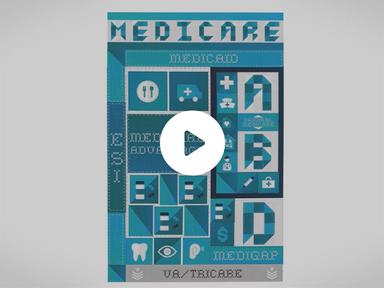
From Original Medicare to Medicare Advantage, Medigap, Part D, and beyond, no two beneficiaries experience Medicare the same way.Medicare is often talked about as if it's a single program, but for the millions of Americans who rely on it, coverage looks more like a quilt than a blanket. Some beneficiaries stay in Original Medicare with Parts A and B. Others add Part D for prescription drugs, or Me...