
Healthcare Access
How difficult is it to access care when it’s needed. Find out more.
View all in Healthcare Access Topic
What Is Medicaid? A Guide to Qualifications, What It Covers, & Costs
Key Takeaways: Medicaid covers 74M+ Americans, 41% of U.S. births, and 5 in 8 nursing home residents, making it the largest health insurer in the U.S. Eligibility combines federal rules with state variation; expansion states cover adults up to 138% of the federal poverty level. Mandatory benefits include hospital care, physician services, and nursing facility care; dental, vision, and prescription...
Prescription Drug Costs: Plans, Coverage, & Other Price-Driving Factors
Key Takeaways: U.S. prescription drug spending hit $805.9 billion in 2024, with prices averaging 2.78x higher than 33 other OECD nations. High costs stem from manufacturer pricing power, patent thickets, opaque PBM rebates, and insurance cost-sharing tied to list prices. The IRA capped Medicare Part D out-of-pocket costs at $2,100 in 2026 and enabled the first round of Medicare drug price negotiat...
77% of Older Adults Want to “Age in Place” - Housing, Health Care, and Transportation
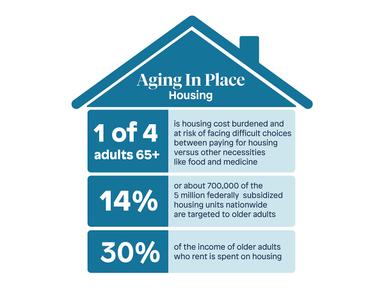
If there is one thing Americans can agree on, it’s that they do not want to end their life living in a nursing home. In fact, about 77% of older adults say that they want to “age in place,” remaining in their communities surrounded by the places, people, and things they love. For some this means continuing to live in their current home. For others this might include living in the home of a relati...
VaxMap 2.0: West Health Policy Center and University of Pittsburgh School of Pharmacy Develop County-Level Map of Potential COVID-19 Vaccine Locations
EXECUTIVE SUMMARYIntroductionPreparedness and planning are of upmost importance to ensure a timely and equitable administration of COVID-19 vaccines among the U.S. population. Geographic information systems analysis can be used to inform the design of vaccine distribution and administration plans. These analyses can identify limitations in the existing health care facility infrastructure to ensure...
How Multisector Plans for Aging and PACE Can Work Together to Improve Care for Older Adults
IntroductionAs the population of older adults in the U.S. continues to grow, delivering the services needed to support an aging population becomes increasingly important. States are seeing the impact of the predicted demographic shift across multiple domains—including increased pressure on the health system, direct care workforce, accessibility of home and community-based services, housing, and tr...
Forging Aligned Partnerships Between Value Based Care Organization & Geriatric Emergency Departments
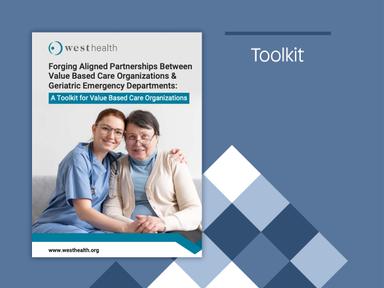
Executive SummaryHospital emergency departments hold the key to preventing avoidable hospital admissions for older adults, addressing a costly and widespread problem with serious ramifications for Medicare and health systems at large. Potentially avoidable readmissions cost Medicare $17 billion a year, in large part because they’re so common. Seventy-three percent of hospital readmissions from ski...
States’ Deployment of Short-Term Funding in Home- and Community-Based Services Exposes Need for Longer-Term Investments
Medicaid home and community-based services (HCBS) is a critical system for serving low-income seniors and allowing them to age at home rather than in congregate care facilities like nursing homes. Despite the vital role that Medicaid HCBS plays in ensuring that some of the most vulnerable populations are able to receive quality care in their preferred setting, HCBS has been historically underfunde...
Understanding Pathways to Medicaid Eligibility Among California's Medicare Beneficiaries
Executive SummaryIndividuals who are enrolled in both Medicare and Medicaid are considered ‘dually eligible’ for both programs as a result of their low income, age, and/or disability status. Because of the varying eligibility pathways, dually eligible beneficiaries are a diverse group, including some of the most medically complex and high-cost enrollees, as well as enrollees who are comparatively ...
PACE Telehealth Playbook: Using Telehealth to Care for Seniors at Programs for the All-Inclusive Care of the Elderly
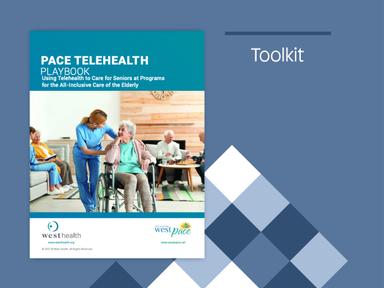
The Program for the All-Inclusive Care of the Elderly (PACE) is an effective model that provides wrap-around care via an interdisciplinary team of providers to typically underserved, vulnerable seniors. As of 2021, the PACE model operates in 30 states. There are 139 sponsoring PACE organizations in the US, running 272 PACE centers, serving approximately 55,000, mostly dual-eligible, seniors. PACE ...
Achieving Value in Medicaid Home- and Community-Based Care: Considerations for Managed Long-Term Services and Supports Programs
States are increasingly adopting value-based payment (VBP) models to tie payment to outcomes including quality of care, health status, and costs for their Medicaid programs. Although most Medicaid VBP models are for primary and acute care services, states are beginning to explore VBP for long-term services and supports (LTSS).This guide, made possible by the West Health Policy Center, describes co...