
Aging in Place
Discover the benefits and challenges of older adults aging in place.
View all in Aging in Place Topic
Inside the West Health City Checkup
Not one of the 789 cities graded by the West Health City Checkup earned an A. Rockville, Maryland, ranked first in the country, earns the single highest grade anyone achieved: a B+. Its Safety & Security domain, on its own, sits at only the 72nd percentile.1 Strong, not flawless, and that's true of the best report card in America.That's not a flaw in the measurement. It's the finding, and that’s w...
77% of Older Adults Want to “Age in Place” - Housing, Health Care, and Transportation
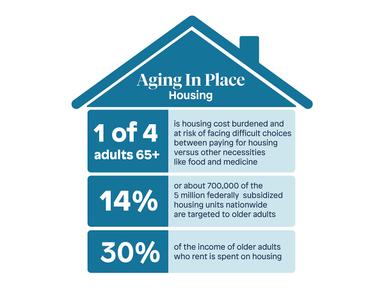
If there is one thing Americans can agree on, it’s that they do not want to end their life living in a nursing home. In fact, about 77% of older adults say that they want to “age in place,” remaining in their communities surrounded by the places, people, and things they love. For some this means continuing to live in their current home. For others this might include living in the home of a relati...
From Isolation to Connection: Supporting Older Adults in Connecting to Community
Social Isolation and loneliness — what is the difference? Social isolation means a person has few social relationships and/or little contact or support from others. Loneliness is the subjective experience of feeling alone or not close to others. Someone can, objectively, have many social connections, but still feel alone. Social isolation is a growing public health concern in the United States, l...
Preparing for the Future: Using Data to Support Aging in America
It’s no secret that communities worldwide are experiencing a demographic shift, with older adults soon outnumbering younger generations. In the U.S., the Census Bureau projects that by 2034, adults ages 65 and older will outnumber children younger than 18 for the first time in history.West Health has worked with federal and state agencies to facilitate aging-focused planning, and a common challeng...
Leveraging Multisector Plans for Aging to Promote Health Equity
As our population skews older, ensuring equitable access to healthcare and social services becomes increasingly important. Multisector Plans for Aging (MPAs) have emerged as a pivotal framework for addressing the diverse needs of older adults and promoting health equity. This comprehensive strategy encompasses initiatives aimed at enhancing well-being and quality of life for older Americans, while...
Creating the Strategic Framework for a National Plan on Aging
Aging in America and the Case for a National Plan on AgingThere are more than 77 million adults ages 60 and older living in the United States, representing more than 23% of its total population, and this cohort is expected to continue growing rapidly in the coming years. In addition, more people are aging with a disability. Our changing demographics require all levels of government, along with key...
Mapping America's Aging Future: What the National Aging Readiness Dashboard Reveals
New West Health Mosaic data tool maps the state of aging in America — showing who's ready and where we need to catch up. A demographic shift unlike any in our history is unfolding across America. By 2034, adults 65 and older will outnumber children under 18 for the first time ever. This isn't just a statistical curiosity — it's a transformation that touches everything from healthcare to housing to...
Tracking Healthcare Affordability and Value

The percentage of Americans who can afford and access prescription drugs and quality healthcare stands at a new low of 55%, a six-point decline since 2022, according to the West Health-Gallup Healthcare Affordability Index. The index was developed in 2021 to track the percentage of Americans who say they have avoided medical care or not filled prescription medications in the last three months, and...
How Multisector Plans for Aging and PACE Can Work Together to Improve Care for Older Adults
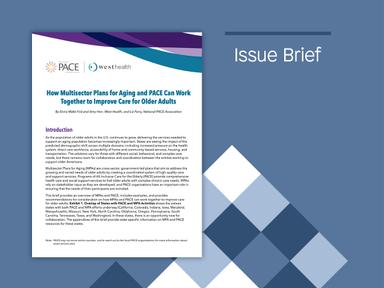
IntroductionAs the population of older adults in the U.S. continues to grow, delivering the services needed to support an aging population becomes increasingly important. States are seeing the impact of the predicted demographic shift across multiple domains—including increased pressure on the health system, direct care workforce, accessibility of home and community-based services, housing, and tr...
States’ Deployment of Short-Term Funding in Home- and Community-Based Services Exposes Need for Longer-Term Investments
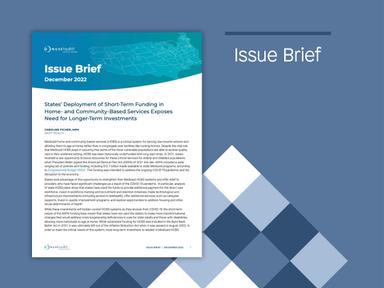
Medicaid home and community-based services (HCBS) is a critical system for serving low-income seniors and allowing them to age at home rather than in congregate care facilities like nursing homes. Despite the vital role that Medicaid HCBS plays in ensuring that some of the most vulnerable populations are able to receive quality care in their preferred setting, HCBS has been historically underfunde...