
indicator
Cognitive Difficulty by Race
Cognitive Difficulty by Race

Description
Share of Adults Age 50 or Older With Increased Confusion or Memory Loss in the Last 12 Months, by Race & Ethnicity and Whether They Have Talked with a Health Professional about the Decline, 2024
Data Source
American Community Survey (ACS)
Calculation Methodology
- 1Filter the dataset to include respondents aged 50 or older using the column
AGEP. - 2Assign race and ethnicity categories using the columns
RAC1PandHISPbased on specified conditions to define groups such as Asian Only, Black or African American Only, Hispanic or Latino (Any Race), White Only, Other Single Race, and Multiple Races. - 3Identify cognitive difficulty status using the column
DREM, whereDREM=1indicates increased confusion or memory loss in the last 12 months. Exclude responses labeled as Unspecified (DREM=2). - 4Apply the weight column
PWGTPto adjust for survey design and population representation. - 5Aggregate weighted counts by
STATEand race/ethnicity categories to calculate the share of adults with cognitive difficulty. - 6Present results in a stacked bar chart showing the share of adults aged 50+ with increased confusion or memory loss by race and ethnicity.
Source Variables using this Indicator (19)
Visuals Using This Indicator (1)
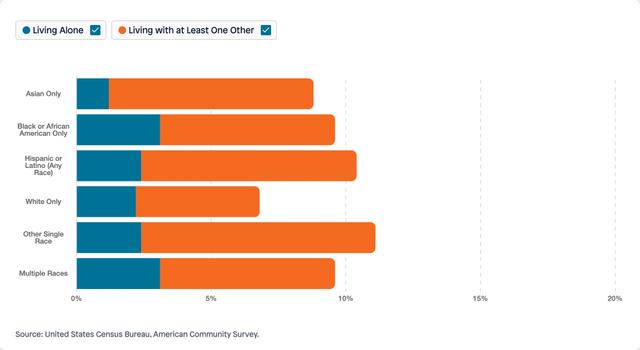
Share of Adults Age 50 or Older With Increased Confusion or Memory Loss in the Last 12 Months, by Race & Ethnicity and Whether They Have Talked with a Health Professional about the Decline, 2024
View visualizationWhy This Matters
Transparent methodology ensures every insight can be traced, verified, and built upon.
Reproducible Research
Every calculation can be traced back to its source. Our methodology documentation enables researchers to replicate findings and build upon our work.
Accountability
Clear attribution and citation requirements ensure proper credit to data providers and maintain research integrity.
Continuous Improvement
Transparent documentation allows for peer review, feedback, and iterative improvements to our analytical approaches.