
Healthcare Access
How difficult is it to access care when it’s needed. Find out more.
View all in Healthcare Access Topic
How Transportation Shapes Health Care Access for Older Adults
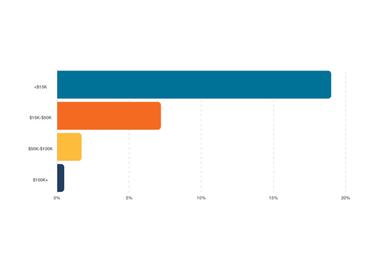
As we age, access to transportation greatly influences our ability to maintain independence and engage in essential daily activities. For more than 11 million older adults who no longer drive, reliable transportation often determines whether they can access timely care, manage their chronic conditions, grocery shopping, and stay connected to their communities. Nearly 10% of older adults over age 6...
Unmet Needs of Older Adults with Military-Based Healthcare Coverage
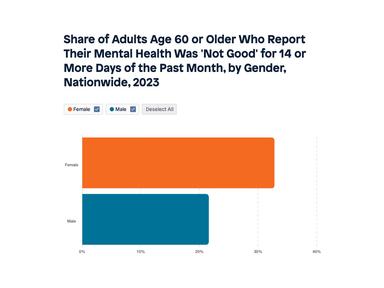
IntroductionThe veteran population is aging rapidly with higher rates of disability compared to non-veterans. The number of veterans age 85 and older is projected to increase by 38% from FY2019 to FY2039, and over 40% of veterans age 65 and older have at least one disability compared to 32% of their non-veteran peers. A large percentage of older adults over 50 have healthcare coverage through a m...
The Mobility Crisis in Aging America: How Geography and Disability Shape Access to Transportation
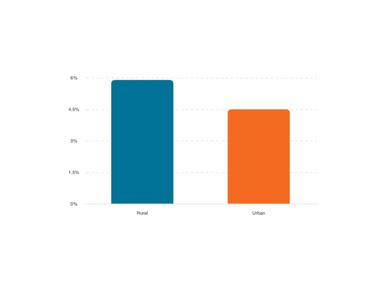
Reliable transportation is essential for maintaining independence, accessing healthcare, and participating fully in community life. Yet for many older adults and people with physical disabilities across the United States, mobility remains one of the greatest barriers to healthy aging. The West Health National Aging Readiness Dashboard, shows that 1 in 5 (21%) adults age 65 and older who live alone...
Medicare Negotiation Outcomes Calculator

This video introduces the Medicare Negotiation Outcomes Calculator—an interactive tool from West Health and Verdant Research that helps users understand how Medicare’s Drug Price Negotiation Program (MDPNP) works and how changing it would impact the program. The IRA, passed in 2022, granted Medicare the power for the first time to directly negotiate prices on high-cost drugs that have been on the ...
77% of Older Adults Want to “Age in Place” - Housing, Health Care, and Transportation
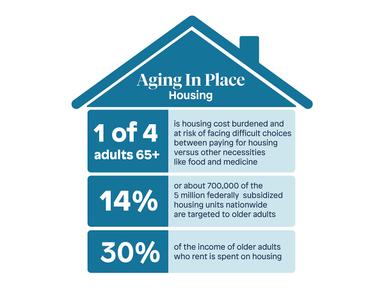
If there is one thing Americans can agree on, it’s that they do not want to end their life living in a nursing home. In fact, about 77% of older adults say that they want to “age in place,” remaining in their communities surrounded by the places, people, and things they love. For some this means continuing to live in their current home. For others this might include living in the home of a relati...
Number of Accredited Geriatric Emergency Departments Surpasses 500, Elevating Care for Older Adults
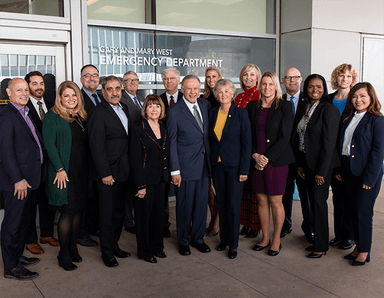
In 2018, the American College of Emergency Physicians (ACEP) established the Geriatric Emergency Department Accreditation Program in response to growing evidence that emergency departments needed to do more specifically for older adults and not take a one-size-fits-all approach to care.Six years later, more than 500 geriatric emergency departments (GED) have earned accreditation spreading across 2...
How Multisector Plans for Aging and PACE Can Work Together to Improve Care for Older Adults
IntroductionAs the population of older adults in the U.S. continues to grow, delivering the services needed to support an aging population becomes increasingly important. States are seeing the impact of the predicted demographic shift across multiple domains—including increased pressure on the health system, direct care workforce, accessibility of home and community-based services, housing, and tr...
Using Telehealth to Provide Care Delivery Options to Patients
CONTENTTHE CHALLENGETHE GOALPROGRAM DESCRIPTIONIMPLEMENTATIONMETRICSHURDLESCONSIDERATIONSKEY TAKEAWAYSThe Jefferson Health telehealth program was designed to give its patients options and autonomy in choosing how they received care, as well as improve coordination between providers, patients, and caregivers.Debunking biases around telehealth increased both provider and patient adoption of the tele...
Equity in Telehealth: Toolkit for Telehealth Providers
Here are the 14 tools the toolkit outlines for providers to care for older adults using telehealth:Equitable and Accessible CareVision AssessmentHearing AssessmentCognitive AssessmentRecommendations for Communicating with Older Adults During Telehealth EncountersCommunicating with People with DisabilitiesEngaging with Families and CaregiversNational Standards for Culturally and Linguistically Appr...
Transforming Telehealth Care of Older Adult Veterans
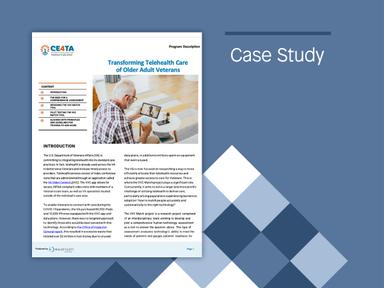
CONTENTIntroductionThe need for a comprehensive assessmentDesigning the VVC match toolPilot testing the VVC match toolAligning with principles and guidelines for telehealth and agingINTRODUCTIONThe U.S. Department of Veterans Affairs (VA) is committing to integrating telehealth into its standard care practices. In fact, telehealth is already used across the VA to better serve Veterans and increase...