
Food Security
Learn how big an issue food insecurity is for older adults.
View all in Food Security Topic
Safety Net Programs Don’t Keep Up with Older Adults’ Actual Costs of Living
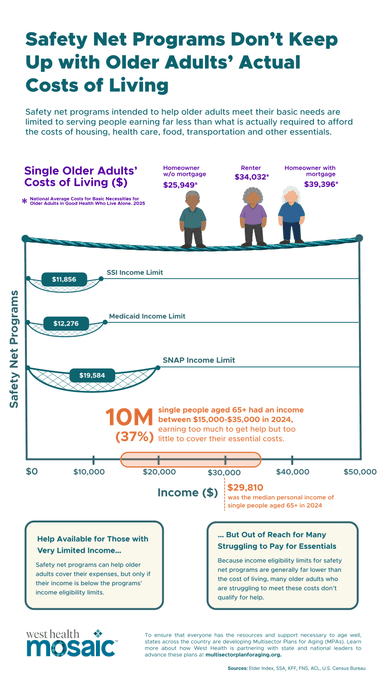
The infographic below illustrates how the income eligibility limits for several major safety net programs compare with the actual cost of living for older adults. While these programs provide critical support for those with the lowest incomes, many older adults who are struggling financially fall outside eligibility thresholds and are unable to access assistance.Key Takeaways• The cost of living i...
Unmet Needs of Older Adults with Military-Based Healthcare Coverage
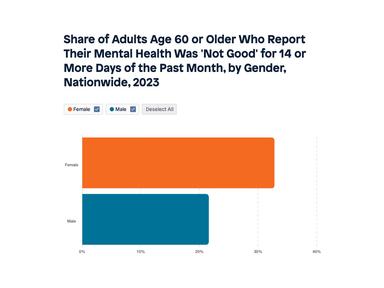
IntroductionThe veteran population is aging rapidly with higher rates of disability compared to non-veterans. The number of veterans age 85 and older is projected to increase by 38% from FY2019 to FY2039, and over 40% of veterans age 65 and older have at least one disability compared to 32% of their non-veteran peers. A large percentage of older adults over 50 have healthcare coverage through a m...
The Growing Challenge of Food Insecurity for Seniors in the U.S.
Food insecurity is a problem that impacts Americans young and old. In 2023, nearly 13% of adults age 50 to 59 and more than 9% of adults age 60 and older experienced food insecurity — an increase from prior years. The U.S. Department of Agriculture (USDA) groups food insecurity into two categories: (1) low food security, defined as reduced quality, variety, or desirability of food, with little or...
Food Assistance Cuts Threaten Older Adults' Health
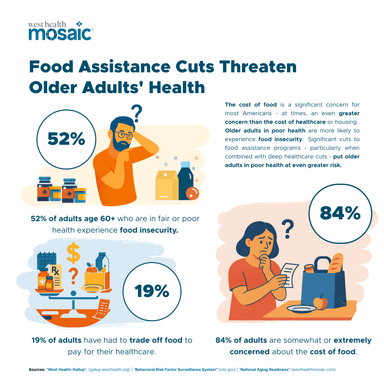
Key Takeaways:52% of adults age 60+ in fair or poor health experience food insecurity. Older adults in poor health are significantly more vulnerable to running out of food and lacking the money to buy more.19% of adults have had to trade off food to pay for healthcare. Rising costs force many Americans into impossible choices that undermine both nutrition and health.84% of adults are somewhat or e...
Using the Holiday Season to Address Persistent Malnutrition

The holiday season is a traditional time of giving to those in need, particularly those who are food insecure. Favorite foods, family and good cheer go hand-in-hand, but the deluge of meals, packaged goods and grocery deliveries can’t correct a year-long struggle with malnutrition that increased sharply during the pandemic.In the face of such abundance, now is a great time for medical providers to...
A Practical Guide: Creating a Screening & Referral Program to Address Malnutrition
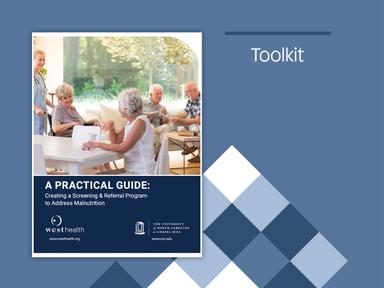
This guide was developed by West Health and the University of North Carolina to serve as a resource for providers, clinical staff, and healthcare administrators working in acute care settings including Emergency Departments, Urgent Care Clinics, and other healthcare settings who care for a broad population of patients regardless of their ability to pay. In this guide, we offer a structured approac...
Malnutrition Resources Toolkit
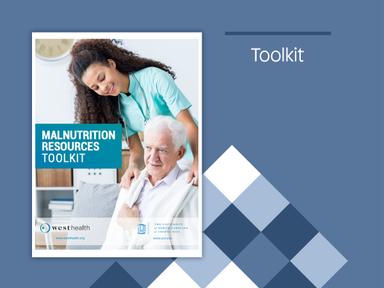
This toolkit was developed by West Health and the University of North Carolina to support ED staff in screening senior patients for food insecurity. Food insecurity is a key risk factor for malnutrition, a serious concern for older adults. The ED provides a unique opportunity to intervene with an extremely vulnerable segment of our older adult population. Screening patients is a chance to effect r...
Leveraging Home‐Delivered Meal Programs to Address Unmet Needs for At‐Risk Older Adults: Preliminary Data
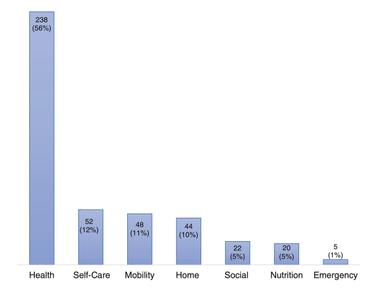
AbstractBACKGROUNDHome‐delivered meal programs serve a predominantly homebound older adult population, characterized by multiple chronic conditions, functional limitations, and a variety of complex care needs, both medical and social.DESIGNA pilot study was designed to test the feasibility of leveraging routine meal‐delivery service in two home‐delivered meal programs to proactively identify chang...
Optimizing Home-Delivered Meal Services to Provide Better Care for Seniors

The OpportunityThere is growing recognition that social determinants of health can exacerbate health issues and impact healthcare costs. Vulnerable populations such as older adults often have unmet social needs including housing, transportation, access to healthy foods and in-home care. Meals on Wheels programs are well-positioned to identify and address such social and environmental factors becau...
More Than a Meal Process Expansion

There is growing recognition that social factors can exacerbate health issues and impact health outcomes, leading to dramatically increased costs associated with healthcare utilization. As a result, the U.S. healthcare system is increasingly embracing the importance of identifying and acting on the social determinants of health (SDOH) – the social, economic and environmental factors that impact an...