
Home-Based Primary Care for California’s Seniors
Advocating for scalble and sustainable home-based primary care for seniors
September 11, 2018
Key Facts: Home-Based Primary Care
The Need
Today, 70 percent of Californians aged 65 or older have at least one chronic condition. As California’s senior population expands by four million people through 2030, the challenges associated with proper care coordination will be significantly magnified. Addressing California seniors’ care coordination needs will extend beyond medical treatment – and will be essential for ensuring the best health and well-being outcomes for older individuals.
Many seniors are less mobile, have inadequate access to transportation, experience social isolation, struggle with behavioral health issues, can’t afford housing and lack access to nutritious meals. In addition, long-term, coordinated nursing home care can cost $90,000 per year, putting it out of reach for most seniors. Addressing these needs through integrated, community-based care and supportive services models must involve coordination of both the medical and social aspects required for older adults – especially our most vulnerable seniors – to age safely in place with dignity.
What Is Home-Based Primary Care?
Home-based primary care (HBPC) is a multidisciplinary ongoing care strategy for providing in-home treatment primarily to medically complex homebound seniors. Recent studies have demonstrated that HBPC can be a cost-effective strategy for delivering care to frail patients while maintaining or improving quality of care and patient satisfaction. With the growing senior population in the U.S. and amid cuts to Medicaid and Medicare, many healthcare providers and senior health advocacy organizations are working to ensure more seniors will have access to HBPC, which allows them to experience seamless transitions among their team of care providers in their homes, avoiding the expense and disruption of institutional care.
Why Home-Based Primary Care Works
HBPC provides an ideal way to address the needs of this specific population by serving as the clinical hub that coordinates the various clinical and non-clinical services. The evidence to justify longitudinal and holistic HBPC is growing – both in terms of cost savings, as well as patient outcomes and satisfaction. In fact, HBPC has gained enough momentum as a primary care transformation effort to warrant inclusion in the Center for Medicare & Medicaid’s (CMS) groundbreaking Center for Medicare & Medicaid Innovation (CMMI) demonstration programs – alongside other care models such as accountable care organizations (ACOs).
West Health’s Home-Based Primary Care Advocacy Efforts:
Taking Action
Through a combination of applied medical research, supportive policy, effective advocacy and outcomes-based philanthropy, West Health is working to create and foster new integrated care models that improve health outcomes and better address both the medical and non-medical needs of seniors and their families. Our institute, policy center and foundation all work together under the umbrella of West Health with a shared mission to enable successful aging for our nation’s seniors.
Below are examples of our HBPC research studies:
West Health and The SCAN Foundation’s “We Stand With Seniors…Will You?” public awareness and education campaign focuses on the specific challenges seniors and their families face in accessing high-quality, affordable healthcare, dental care and supportive services and the cost to the state if these challenges are not addressed.
Visit www.WeStandWithSeniors.org for more information. Keep up with #StandWithSeniors on social media via Facebook @WeStandWithSeniors and Twitter @WeStandWSeniors.
Downloads
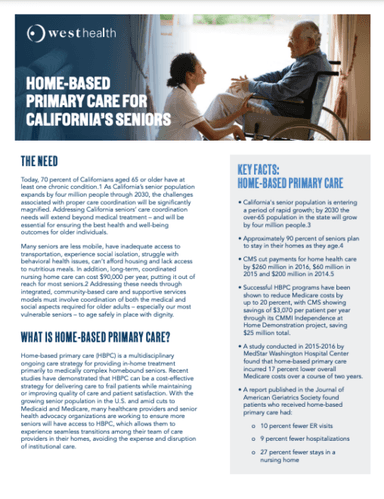
Home-Based Primary Care for California’s Seniors
Download