
Healthcare innovation happens in the lab. Adoption happens on the night shift.
August 29, 2026

Healthcare innovation is often measured by what’s new, but its real test is how successfully and thoughtfully those technologies get into the hands of the clinicians and patients who need them. That gap, between what’s built and what’s actually used, was the focus on this year’s West Health @HC65 Action Alliance Summit.
Across sessions on digital health, implementation science, workforce transformation, and policy, a common thread emerged. Technology alone doesn’t change healthcare. Lasting improvement comes from thoughtful implementation into clinical workflows, strong leadership, and earning the trust of the clinicians and patients who use it.
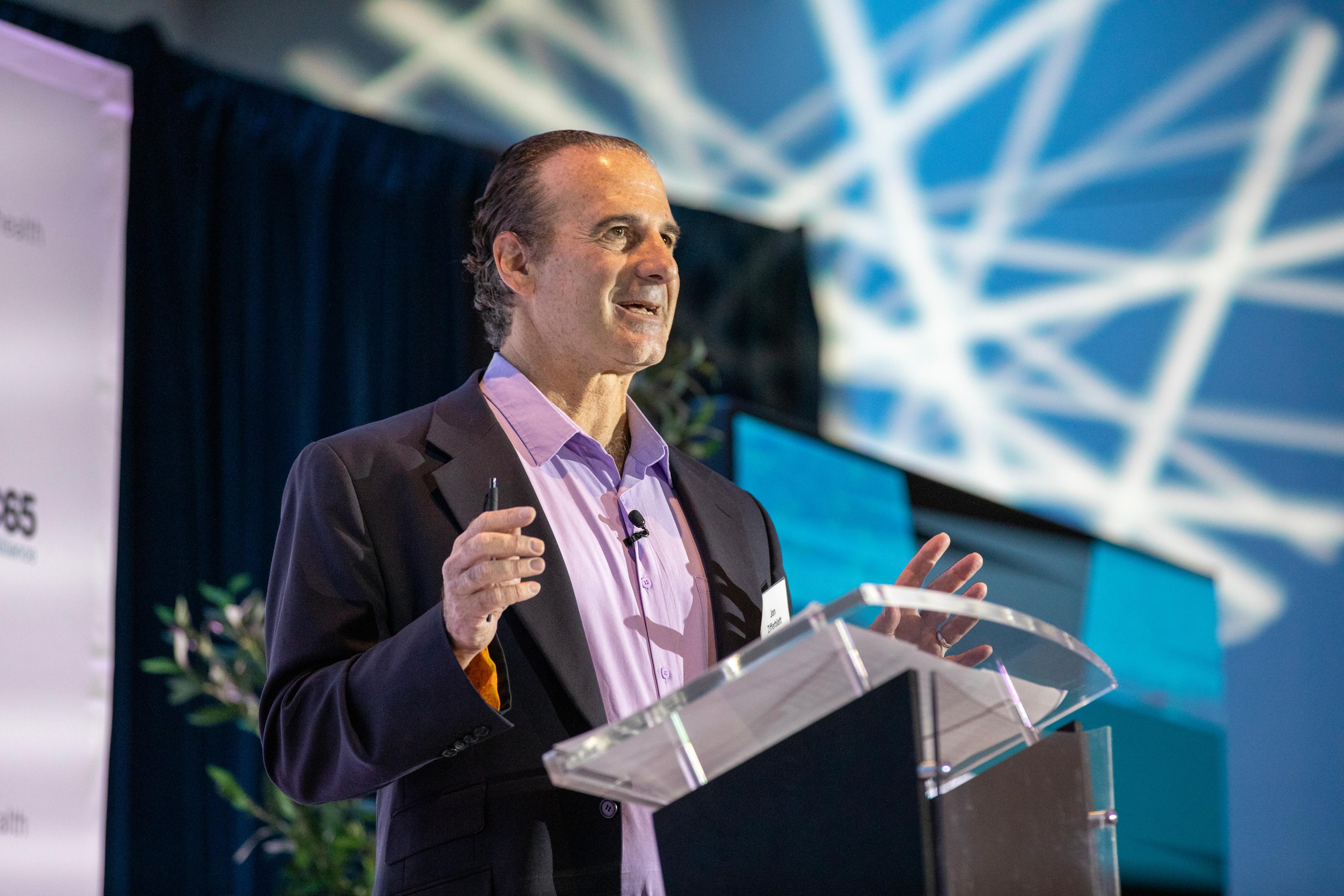 Picture above: Jon Zifferblatt, Chief Strategy Officer, West Health, addresses the crowd at West Health's @HC65 Action Alliance Summit in Denver, CO.
The question has evolved from: What technology should we build? to: How do we get what we’ve built to actually work everywhere it’s needed?
One observation captures this well:
"Evidence gets technology published. Culture and workflow get technology used."
It’s a reminder that scientific validation is only the beginning. Successful implementation depends on people.
Lasting change requires clinician trust, thoughtful workflow redesign, executive alignment, and frontline engagement. These human factors determine whether technology actually transforms care. The work that follows implementation, including governance, staffing models, operational redesign, change management, and cultural alignment is often what determines success.
Solving Problems Before Buying Solutions
A problem-first mindset should guide technology adoption, rather than a technology-first one.
What operational challenge are you trying to solve? Is it emergency department boarding? Delayed patient placement? Documentation burden? Clinician burnout? Inefficient operating room throughput? Care transitions? Defining the problem clearly is the necessary first step.
 Pictured above: West Health and UC San Diego Health Accelerator team
This practical approach shows up clearly in real-world examples. At UC San Diego Health, an inbound AI agent fielding patient calls resolved concerns without human escalation two-thirds of the time, with patient experience scores of 9.6 out of 10, which is evidence that even an imperfect tool can outperform expectations when it targets a genuine pain point. One health system introduced virtual care into its most understaffed critical care units, where remote clinical support relieved bedside teams who were stretched thin. Within months, the unit’s vacancy rate dropped from 20% to under 4%. In both of these cases, the technology succeeded because they were aimed at a clearly defined problem.
Measuring Success Differently
Another recurring theme is the need to rethink how organizations evaluate innovation.
Healthcare technology investments are traditionally judged by financial return, operational metrics, or clinical outcomes. Those measures remain important, but they aren’t sufficient on their own. Leaders also need to ask additional questions.
The better question isn’t whether a technology adds new capabilities. It’s whether that technology makes work easier and allows clinicians to spend more time caring for patients.
Scaling Requires More Than Technology
One lesson connected every session: implementation is ultimately a cultural challenge.
Successful organizations described building shared ownership across departments, keeping innovation from remaining isolated within information technology or digital health teams. This requires preparing leaders for change, communicating the "why" behind new initiatives, and recognizing that resistance is a normal part of organizational transformation.

A common metaphor captures this well: frontline staff are too often brought to the table at dessert, invited to react to a technology decision after it’s already been made, rather than at the appetizer, when the problem is still being defined and the solution is still taking shape. The same dynamic plays out at the industry level too, where healthcare itself is often invited to the technology table only once the terms are already set. Scaling a technology depends as much on who is in the room at the start as it does on the technology itself.
Healthcare professionals work in an industry built on scientific advancement, yet remain understandably cautious about change. Building trust, providing education, and demonstrating value become essential steps toward successful adoption.
What It Will Take
Important challenges remain. Policy and reimbursement models continue to evolve alongside rapidly advancing technologies. Questions surrounding artificial intelligence, value-based care, interoperability, digital therapeutics, and reimbursement pathways are far from settled.
These questions lead to a familiar conclusion: meaningful transformation depends not only on creating new capabilities, but on ensuring they improve care in ways that clinicians, patients, and health systems can realistically sustain.
Many organizations have already invested in technologies capable of improving patient care and reducing operational strain. The next phase of innovation will be determined by how effectively healthcare implements what already exists.
This work demands discipline. No system has the bandwidth to chase every new idea, so leaders must narrow their focus to a select few priorities with real potential to improve outcomes.

It also demands agility. Most organizations can point to successful pilots, but far fewer can point to something that’s been adopted at scale. That’s because scaling requires navigating new complexities and resistance that might not have been evident in a pilot. Agility is what lets leaders recognize when the plan needs to change, and adjust without losing momentum.
None of this works without trust. Right now, healthcare is adopting digital tools faster than it’s building confidence in them. Often when clinicians don’t trust a new technology, they work around it instead of with it. Healthcare innovation is about having tools that respect how clinicians actually work.
Discipline, agility, and trust aren’t separate challenges; they’re all part of the same shift from chasing what’s new to what already exists. Many organizations have already invested in technologies capable of improving patient care and reducing operational strain. The next phase of innovation will be determined by how effectively healthcare implements what already exists.
For healthcare leaders, that may be both the greatest challenge and the greatest opportunity ahead.