







Why Behavioral Health Trends are a Matter of Urgency
Across the United States, behavioral health symptoms and diagnoses – which encompass mental health and substance use disorders – are on the rise. Because they are common across both adult and pediatric populations, our team of researchers set out to better understand the societal impact of this increase. Our researchers found that behavioral health diagnoses are a matter of public health urgency, and lead to considerable morbidity, mortality, healthcare utilization, and treatment costs.
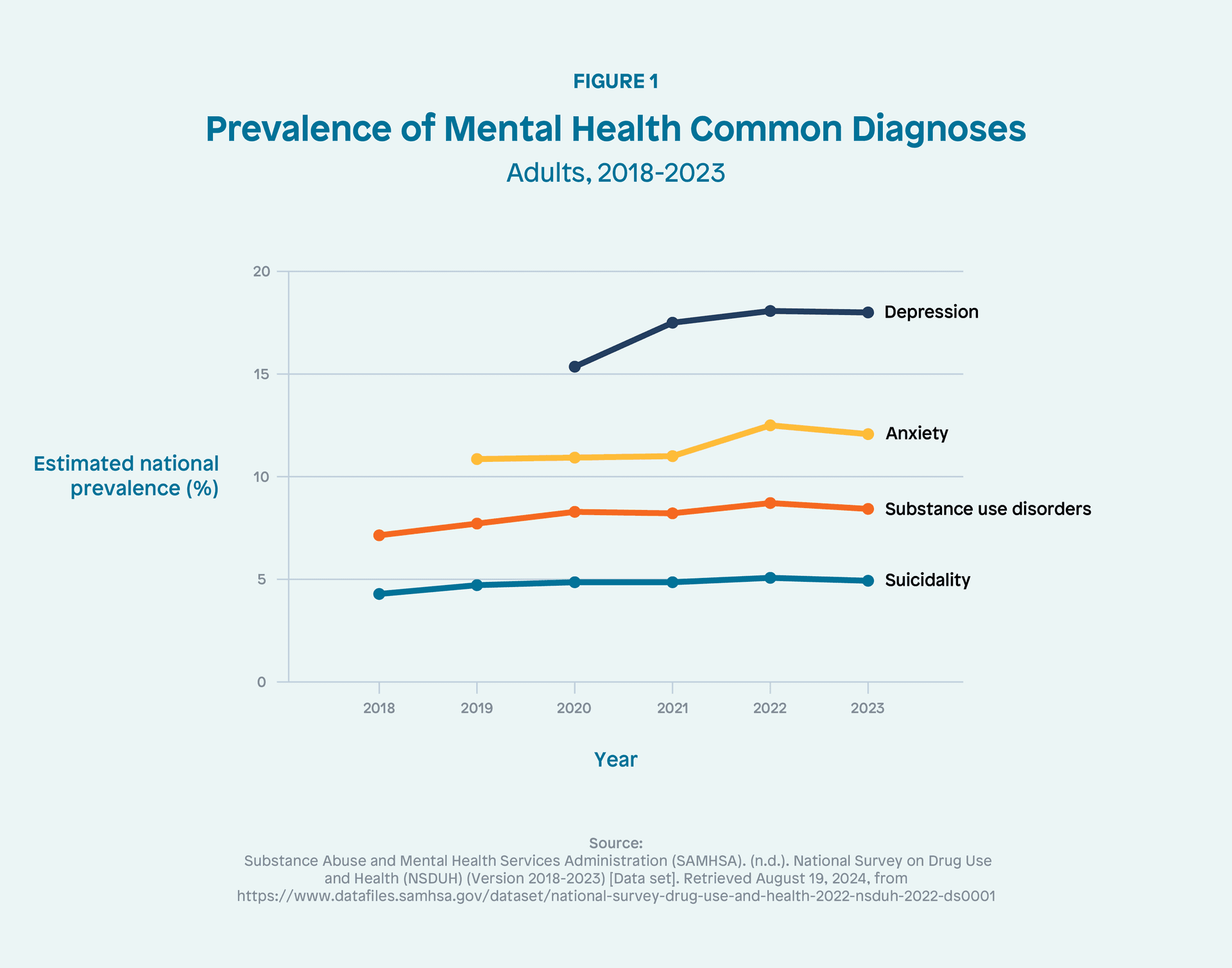
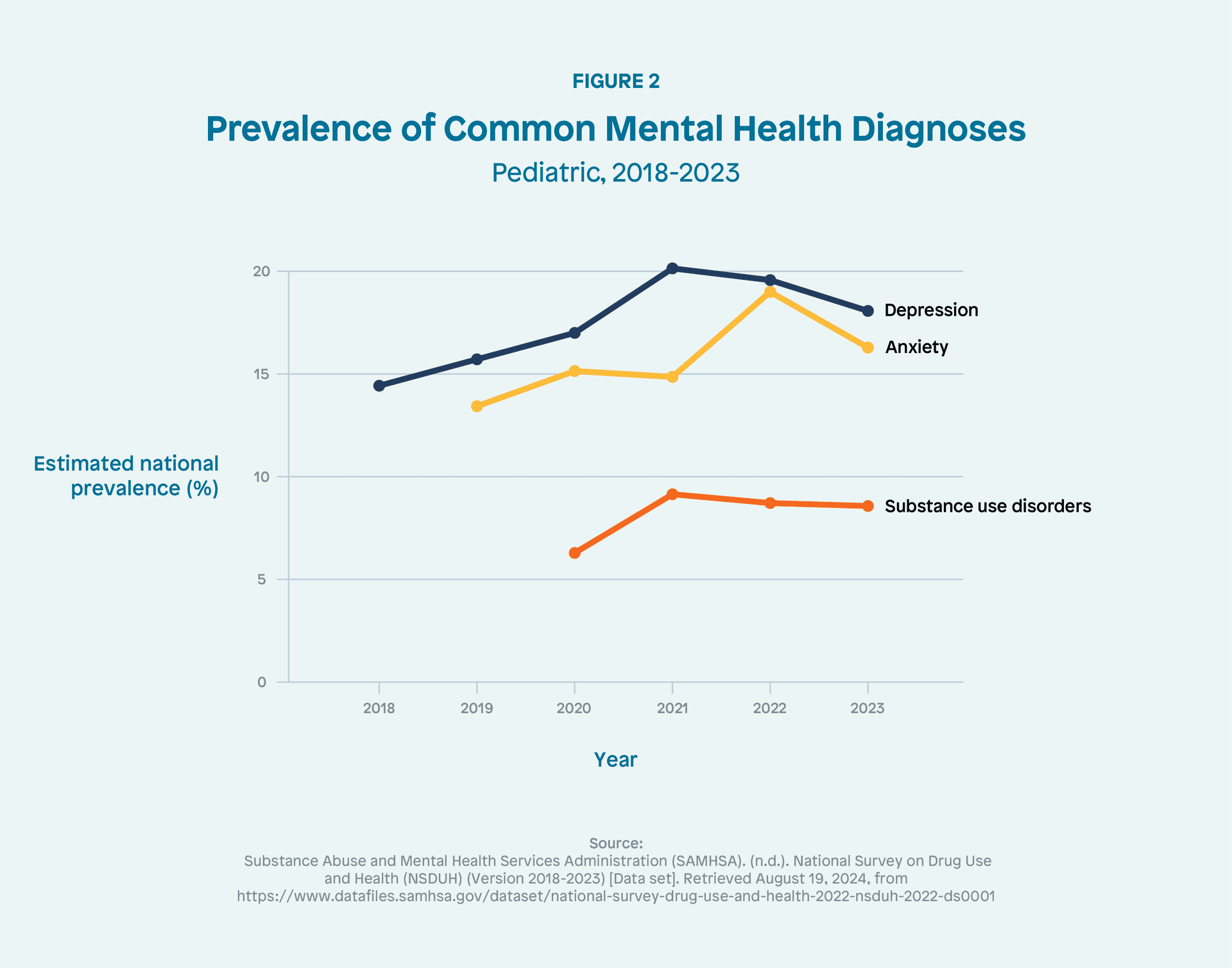
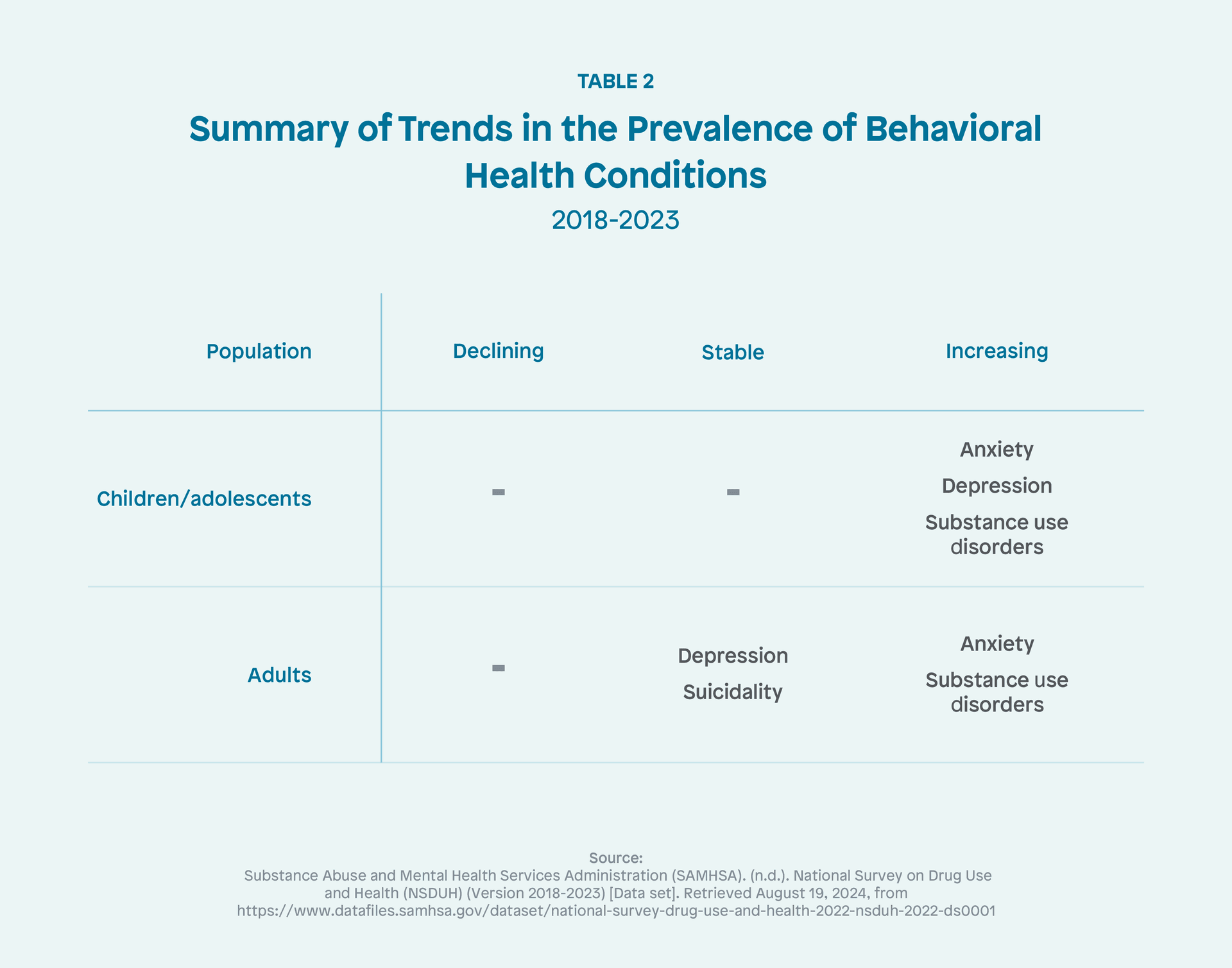
We wrote the following issue brief to uncover the epidemiology and socio-economic impact of four key diagnoses: anxiety, depression, substance use disorders, and suicidality. Throughout this brief, our research highlights the impact of these conditions on healthcare costs and clinical outcomes. Finally, we illustrate the urgent need for an ecosystem of stakeholders – consisting of community leaders, payers, government, and healthcare entities – to jointly provide evidence-based, scalable, equitable, and sustainable solutions.
Research Results: Key Takeaways at a Glance
“Across the board, community leaders, payers, government, and healthcare entities must jointly come together to provide evidence-based, scalable, equitable, and sustainable solutions.”
The Impact of the COVID-19 Pandemic on Behavioral Health
Far and wide, research repeatedly showed that the COVID-19 pandemic negatively impacted behavioral health across the age spectrum. Data limitations prevent this issue brief from specifically assessing the impact of COVID-19 on all reported diagnoses and age groups. However, there is evidence in the available data to suggest the following:
A Public Health Lens
From a public health standpoint, the generally high prevalence of behavioral health conditions is concerning. The uptick in negative behavioral health trends invariably leads to worse general health outcomes, reduced quality of life, lower functional status, and higher overall health costs. Moreover, impacts to individuals and society, and the cost of care, are prevalent across anxiety, depression, substance abuse disorders, and suicidality.
A Closer Look at the Epidemiology of Four Key Disease States
Anxiety
Depression
Substance Use Disorders
Suicide
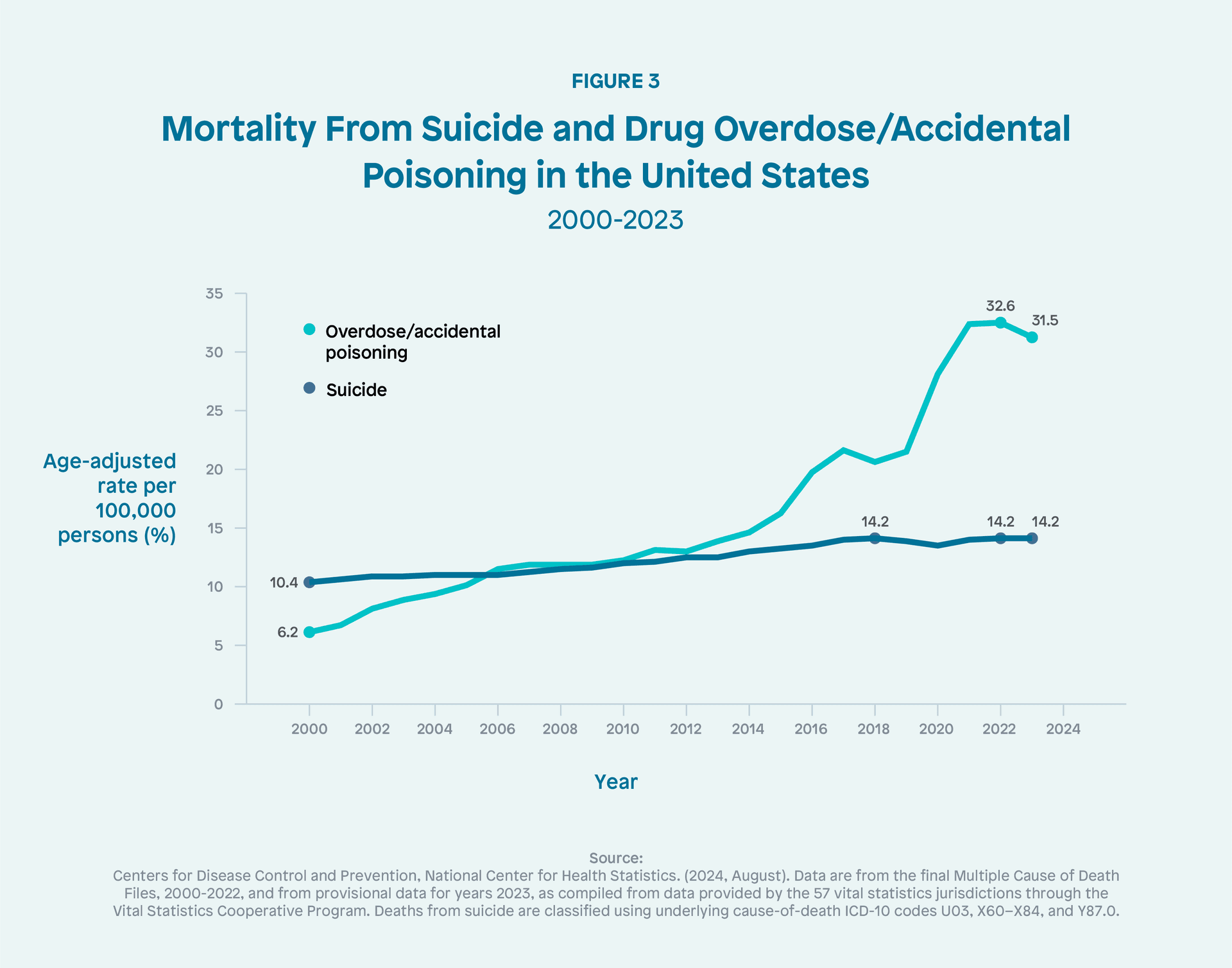
A suicide prevention strategy is needed: Deaths from suicide have increased to unprecedented numbers in the United States. According to the CDC, approximately 50,000 people die from suicide annually, equating to one death every 11 minutes.13 Roughly 1.5 million people attempt suicide each year,14 and the age-adjusted suicide rate rose steadily from 10.4 per 100,000 in 2000 to 14.2 in 2023, with the total number of suicide deaths rising by 68% from 29,350 to 49,315.
An ongoing challenge: Between 2022 and 2023, the age-adjusted suicide rate remained steady at 14.2 per 100,000, indicating a persistent public health challenge (Figure 3).15,16 As of 2022, suicide is the second leading cause of death for people 44 years of age and younger.17
“The uptick in negative behavioral health trends invariably leads to worse general health outcomes, reduced quality of life, lower functional status, and higher overall health costs.”
Share
The Need for Rigorous Research and Reporting
Based on our extensive research, we drew the following conclusion: behavioral health symptoms are often under-reported due to associated stigma or social and cultural conceptualizations of health.21 Without objective measures (e.g., laboratory tests, medical imaging) or standardized clinical interviews to assess behavioral health symptoms, diagnosis is often measured using patient-reported symptoms or observations. Given these challenges, estimated behavioral health prevalence rates often vary considerably.
In the case of depression and other common behavioral health conditions, the rates reported above from the NSDUH and NHIS may differ from those reported through other sources, as criteria for having the disorder often differ across assessments. For example, a widely cited study reported that 28% and 33% of adults in the United States had depression in 2020 and 2021, respectively, using depression operationalized as a Patient Health Questionnaire-9 (PHQ-9) score of 10 or higher.22 Conversely, the NSDUH measures depression using the DSM-V criteria for major depressive episodes in the past year.
Another study demonstrated that symptoms of depressive disorders increased from 25% to 30% between August and December 2020, though findings in that evaluation were informed by the four-item Patient Health Questionnaire (PHQ-4) for depression and anxiety and not past-year major depressive episodes.23 Similar findings have been noted for other conditions and populations, such as anxiety and substance use disorders in children and adolescents24 and depression in older adults.25
Looking Ahead: Committing Sustained Attention to Behavioral Health is Critical
The examples we have shared illustrate the importance of examining the underlying datasets used, methodologies, inclusion or exclusion criteria, and measures to avoid comparing fundamentally different sources when interpreting national psychiatric epidemiology data, especially for psychiatrically underserved and disenfranchised populations.26 It is important to acknowledge additional disparities in care, and to note that marginalized individuals are more likely to experience barriers to effective treatment – barriers that must be addressed. Such barriers can also be seen across race and ethnicity, gender, age, and sexual/gender identity.
Ultimately, regardless of the methods or definitions chosen, the prevalence of common behavioral health conditions are substantial at population scale, leading to immense morbidity, mortality and cost. To mitigate the harm from these alarming trends, we believe that community leaders, payers, government, and healthcare entities must partner to promote evidence-based, scalable, equitable, and sustainable solutions.
Supplemental Material: Our Methodological Approach27
Data presented in Figure 1 above were obtained from the National Survey on Drug Use and Health (NSDUH),28 an annual survey administered by the Substance Abuse and Mental Health Services Administration (SAMHSA) and the National Health Interview Survey (NHIS), an annual survey administered by the Centers for Disease Control and Prevention (CDC).29 Both surveys use a complex sampling design to generate nationally representative estimates on SUDs, mental health, and receipt of treatment among adults, children, and adolescents in the United States.
Important NSDUH methodological considerations are briefly outlined below:
Anxiety is not directly assessed by the NSDUH. As a result, NHIS was employed for adult and pediatric anxiety prevalence estimates between 2019 and 2023. Of note, NHIS was not used to estimate anxiety prevalence in 2018, as the survey methodology was markedly changed in 2019, making comparisons to years prior to 2019 unfeasible. For adults, the authors employed a framework described by the National Center for Health Statistics30 and two questions developed by the Washington Group on Disability Statistics (WG) that specifically inquire about anxiety frequency and intensity (WG-ANX).31 Using this framework, which links answers on the two WG-ANX questions to estimated anxiety severity, the authors coded respondents with “medium” or “high” levels of anxiety as “anxious” for the purposes of this evaluation. For children and adolescents in NHIS, only one WG-ANX question was publicly available – anxiety frequency. As a result, the authors coded participants who reported feeling “worried, nervous, or anxious” either daily or weekly as “anxious” for the purposes of this evaluation.